Dve Gitari
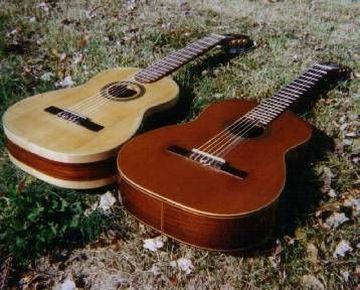
Two Guitars, Две гитары
|
This very popular Russian Gypsy song was composed in the 19th century by the Russian composer Ivan Vasiliev (1810-1870) to the words of a poem, written by Apollon Grigoriev (1822-1864), a Russian poet, literary and theatrical critic.
In the 19th century in Russia, the Gypsies were regarded in two ways: on the one hand, the men were considered to be horse thieves, and the women fortunetellers. On the other hand, they were romanticized for their carefree lifestyle, their independence, their temperament and, of course, for their musicality. At that time every good restaurant boasted a band of the Gypsy singers and dancers, and almost on daily base noblemen and gentries came to listen to their performances. It is commonly said that a Russian dies twice: the first time for the Motherland, the second one - while listening to Gypsies. The most famous of those bands was the choir of Ivan Vasiliev. A friend of his, Apollon Grigoriev, attended their performances very often, and he was so impressed by the singing and the guitar accompaniment, that he wrote a poem about it. The song reflected also his unhappy love to Antonina Korsh, whose appearance reminded a Gypsy woman a little, as well as to the other woman, Leonida Wizard. He called the poem "Tzyganskaya Vengerka" (Hungarian Gypsy). He had shown the verse to Vasiliev, who wrote the notes to it. Vasiliev used to be a talented musician and arranger. He felt the value of the verse and strengthened it with his music. |
Gypsy choirs performed an incendiary dance, called "The Hungarian Woman", a Gypsy version of an unknown Hungarian dance. It consisted of two parts, performed in different tempos. The verse reflects this feature also.
The poem itself was first published in 1857, in the periodical "Syn Otechestva" (Son of the Fatherland) in Saint-Petersburg, Russia. The song was first published by two different publishers, though it is unknown who had been the first. The publisher S. Ya. Yambor from Moscow published a folklore variant of the poem by Apollon Grigoriev. The other Russian edition of the song was published by Euterpe, Saint Petersburg in Russia.
The poem itself was first published in 1857, in the periodical "Syn Otechestva" (Son of the Fatherland) in Saint-Petersburg, Russia. The song was first published by two different publishers, though it is unknown who had been the first. The publisher S. Ya. Yambor from Moscow published a folklore variant of the poem by Apollon Grigoriev. The other Russian edition of the song was published by Euterpe, Saint Petersburg in Russia.
|
The songs refers to the 7-string guitar. That is a native Russian guitar, now rarely used. The Moscow Gypsy Ensemble "Roman" plays such guitars.
The song lived its own life: performers invented their own words, often rude. That is why the song was not widespread in the USSR, as the censorship took care about the citizen`s morality. The situation changed after the famous bard, Vladimir Vysotskiy composed his version and made it well-known. And most known are the words of the refrain. Abroad the song was performed mostly in Russian restaurants. The brilliant performance of the Russian Gypsy Aleosha Dmitriévich, served the basis for the famous version of Charles Aznavour, as well as for the version of Vladimir Vysotskiy, who met Dmitriévich in Paris. The other well-known performance of the song is that of Deanna Durbin. The familiar pizzicato music was not part of the original "Tzyganskaya Vengerka", as it was published in Russia. It was rather an improvisation on the song, which Harry Horlick used as the theme song for his A & P Gypsy Ensemble, on the Atlantic and Pacific radio hour from 1922 to 1937. Horlick says that the balance of the improvisation had been composed by Sasha Makarov, a Russian Czarist refugee, and himself, while being both in Russia. The improvisations were not published or copyrighted until 9-12-1925, when they were copyrighted under the title "Two guitars" for orchestral score and the following day for piano. The publisher was Carl Fisher in New York. The song is performed by accordion players also. |
Yul Brynner and Aleosha Dmitriévich perform the song
|
|
Russian text
Поговори хоть ты со мной, Подруга семиструнная. Душа полна такой тоской, А ночь такая лунная. Вот там звезда одна горит Так ярко и мучительно. Лучами сердце шевелит, Дразня его язвительно. Чего от сердца нужно ей, Ведь знает без того она, Что к ней тоскою долгих лет Вся жизнь моя прикована. Ах, ты, жизнь, моя жизнь, К сердцу сердцем ты прижмись, На тебя, на тебя греха не будет, А меня, а меня пусть люди судят. И от зари, и до зари Тоскую, мучусь, сетую. Так пой же мне, договори Ту песню недопетую. Две гитары зазвенев, Они жалобно заныли, С детства памятный напев, Старый друг, мой ты ли... Эх, раз да ещё раз, Да ещё много-много раз. Эх, раз да ещё раз, Да ещё много-много раз. (2х) |
Transliteration
Pogovori hot ty so mnoj Podruga semistrunnaya Dusha polna takoj toskoj A noch takaya lunnaya Vot tam zvezda odna gorit Tak yarko i muchitelno Luchami serdce shevelit Draznya ego yazvitelno Chego ot serdca nuzhno ej Ved znaet bez togo ona Chto k nej toskoyu dolgih let Vsya zhizn moya prikovana Ah ty zhizn moya zhizn K serdcu serdcem ty prizhmis Na tebya na tebya grekha ne budet A menya a menya pust lyudi sudyat I ot zari i do zari Toskuyu muchus setuyu Tak poj zhe mne dogovori Tu pesnyu nedopetuyu Dve gitary zazvenev Oni zhalobno zanyli S detstva pamyatnyj napev Staryj drug moj ty li Ehkh raz da eshchyo raz Da eshchyo mnogo-mnogo raz Ehkh raz da eshchyo raz Da eshchyo mnogo-mnogo raz |
English text
At least you will talk to me O' seven-stringed friend of mine My soul is overwhelmed by sorrow At this full moon night There, a star is shining So brightly and grievously With its rays it stirs my heart Mordantly mocking it What does she need of a heart? On her own she knows That my life is shackled to her feet With many years of sorrow O' life, my life Bring our hearts close together You, you will be free from sin And me, let the people judge my fate From dawn to dawn I grief, distress and mourn So sing for me, sing it through That unfinished song Two guitars began to tinkle And plaintively to whine A childhood's long lost melody Are you still that old friend of mine... Eh, do it once, do it twice And many many times more Eh, do it once, do it twice And many many times more |
Sources:
http://lyricstranslate.com/en/dve-gitary-две-гитары-two-guitars.html; http://www.talesfromthekeyboard.com/songs-of-exiles/two-guitars;
https://en.wikipedia.org/wiki/Apollon_Grigoryev; https://books.google.be/books?id=EVninY59ul0C&pg=PA595&lpg=PA595&dq=two+guitars+russian+traditional&source=bl&ots=XFlTrzvBtJ&sig=ZUyfw9fUDDyhw3NGckRvrbUpvBE&hl=nl&sa=X&ved=0ahUKEwjCmafV1JrTAhUKtBQKHU7dAYM4KBDoAQgfMAE#v=onepage&q=two%20guitars%20russian%20traditional&f=false
http://www.sovsekretno.ru/articles/id/1479/
http://lyricstranslate.com/en/dve-gitary-две-гитары-two-guitars.html; http://www.talesfromthekeyboard.com/songs-of-exiles/two-guitars;
https://en.wikipedia.org/wiki/Apollon_Grigoryev; https://books.google.be/books?id=EVninY59ul0C&pg=PA595&lpg=PA595&dq=two+guitars+russian+traditional&source=bl&ots=XFlTrzvBtJ&sig=ZUyfw9fUDDyhw3NGckRvrbUpvBE&hl=nl&sa=X&ved=0ahUKEwjCmafV1JrTAhUKtBQKHU7dAYM4KBDoAQgfMAE#v=onepage&q=two%20guitars%20russian%20traditional&f=false
http://www.sovsekretno.ru/articles/id/1479/
